
New Focused Ultrasound Clinical Trial for Recurrent Glioblastoma
New Focused Ultrasound Clinical Trial for Recurrent Glioblastoma
New Focused Ultrasound Clinical Trial for Recurrent Glioblastoma
Implanted device that increases drug delivery to brain tumor may improve efficacy of chemotherapy
By Alejandra Canales
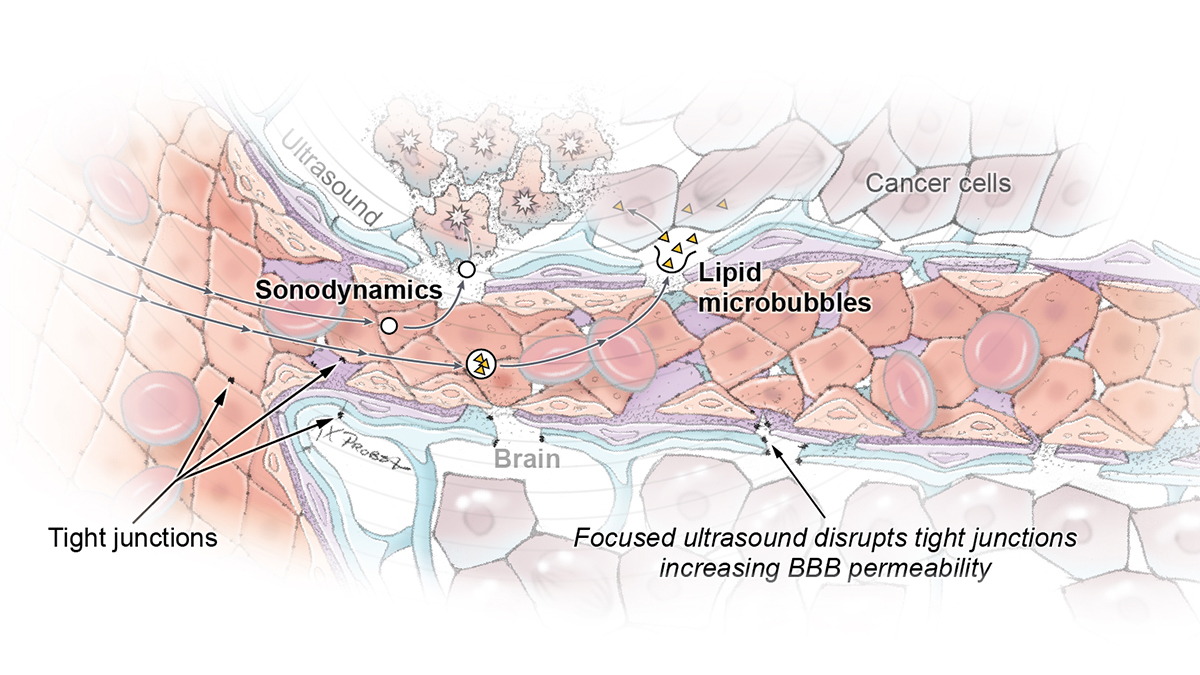
The UCSF Brain Tumor Center is now recruiting for a multicenter clinical trial evaluating an implanted focused ultrasound device and carboplatin for the treatment of recurrent glioblastoma.
Focused ultrasound, which safely and temporarily disrupts the blood-brain barrier, allows therapeutic agents to reach the region surrounding the brain tumor.

“Focused ultrasound may lead to more effective treatment with carboplatin by allowing high enough concentrations of the drug to reach tumor cells that are not removed during surgery,” said John de Groot, MD, chief of the Division of Neuro-Oncology within the Department of Neurological Surgery.
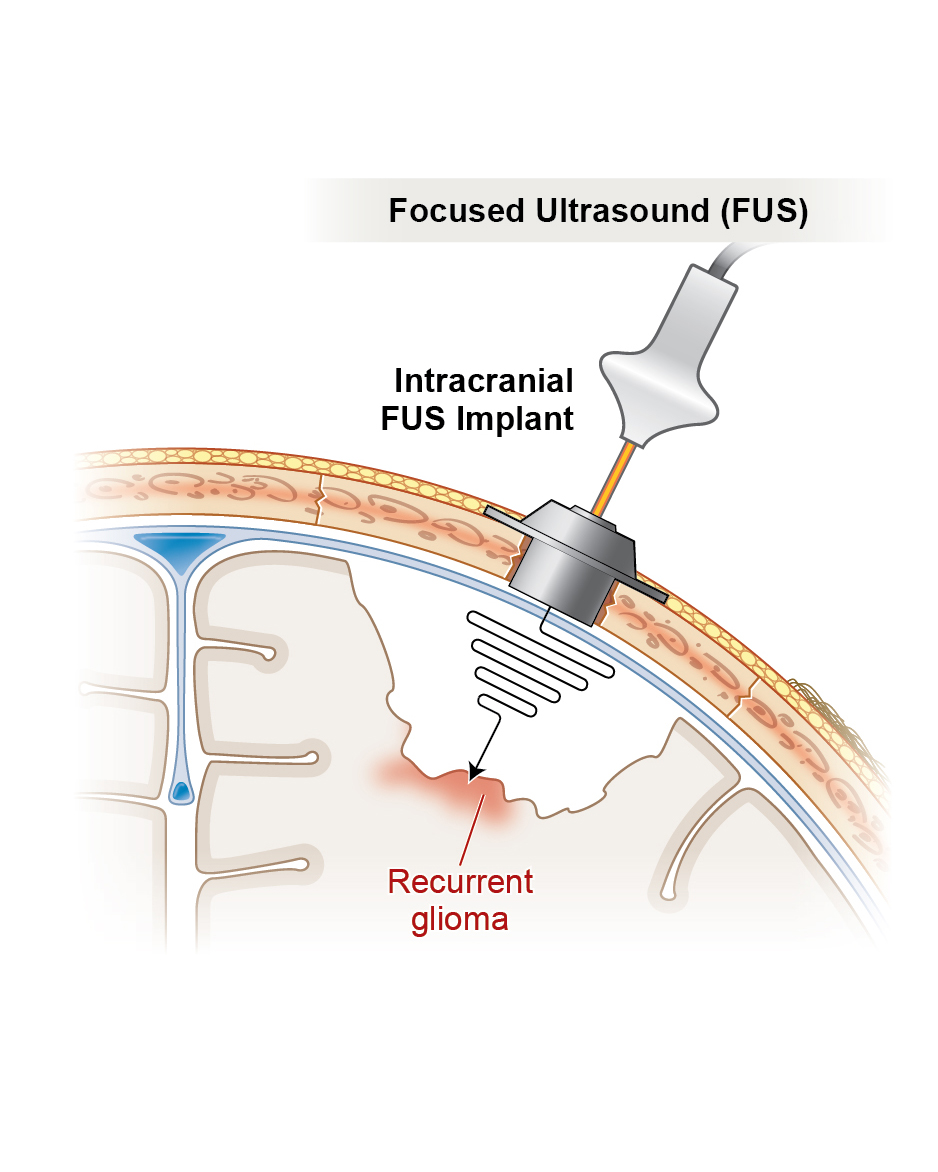
The focused ultrasound device being studied in this trial, Sonocloud-9, is inserted in place of the skull after the patient’s tumor resection. It generates low-intensity pulses of ultrasound waves that – when combined with an injection of microbubbles into the blood – transiently open the blood-brain barrier around the tumor cavity.
This approach could help carboplatin – which is widely used to treat other cancers but does not cross the blood-brain barrier – reach its required therapeutic dose when delivered systemically. Preliminary findings from a phase I study in patients with recurrent glioblastoma showed that after focused ultrasound, carboplatin levels were 5.9 times higher in the brain.
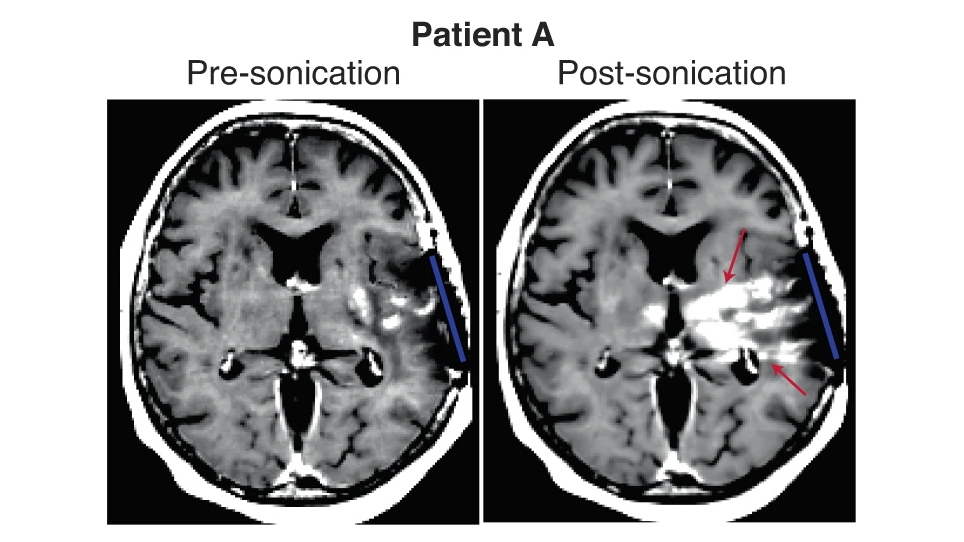
Another phase I/II clinical trial confirmed with MRI that the focused ultrasound device was effective in disrupting the blood-brain barrier in the area surrounding the tumor. In addition to being well-tolerated by patients with recurrent glioblastoma, the 12 participants who received the focused ultrasound treatment right after a dose of carboplatin lived longer than expected with a median overall survival of 14 months. These results, de Groot says, are encouraging despite being in a small cohort of patients.

This phase III trial aims to enroll approximately 560 participants between UCSF and multiple other study sites across the United States and Europe. Patients will receive either treatment with focused ultrasound and carboplatin every three weeks or with the chemotherapy agents administered as part of standard-of-care (temozolomide or lomustine). To be eligible, patients with glioblastoma – confirmed by the absence of mutation(s) in the IDH1 or IDH2 genes – must be a surgical candidate for their first recurrence of the disease.
For more information on enrollment: