

Caregivers: An Indispensable Role on a Patient’s Care Team
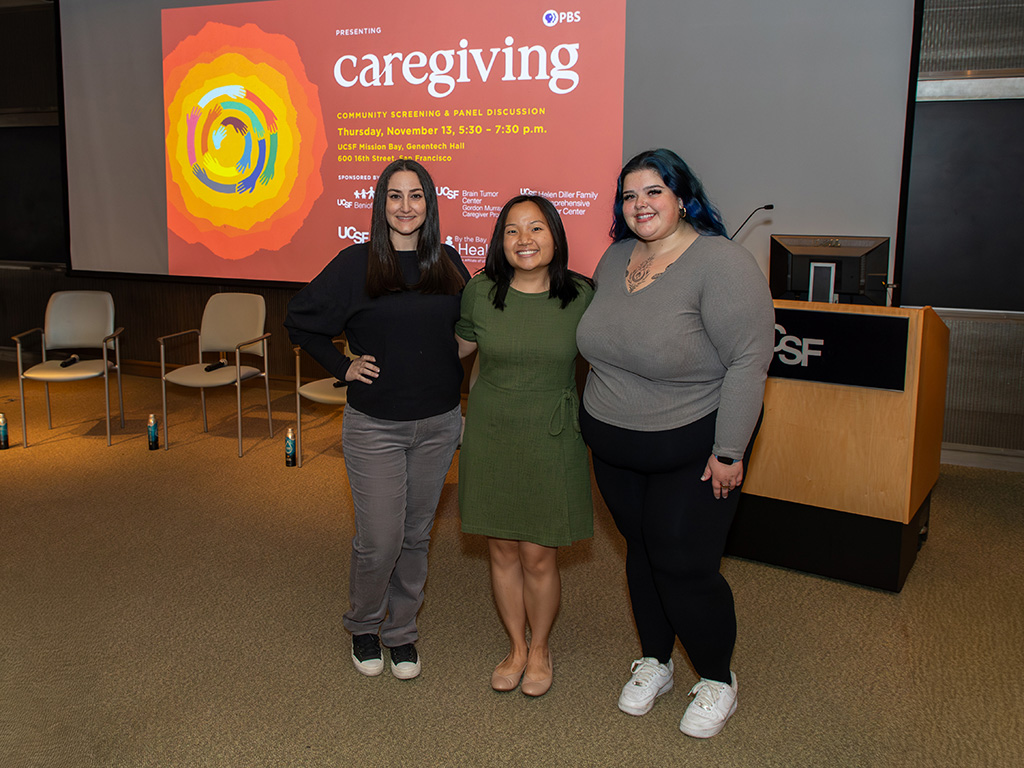
Documentary screening and panel discussion highlight strategies to help support caregivers.
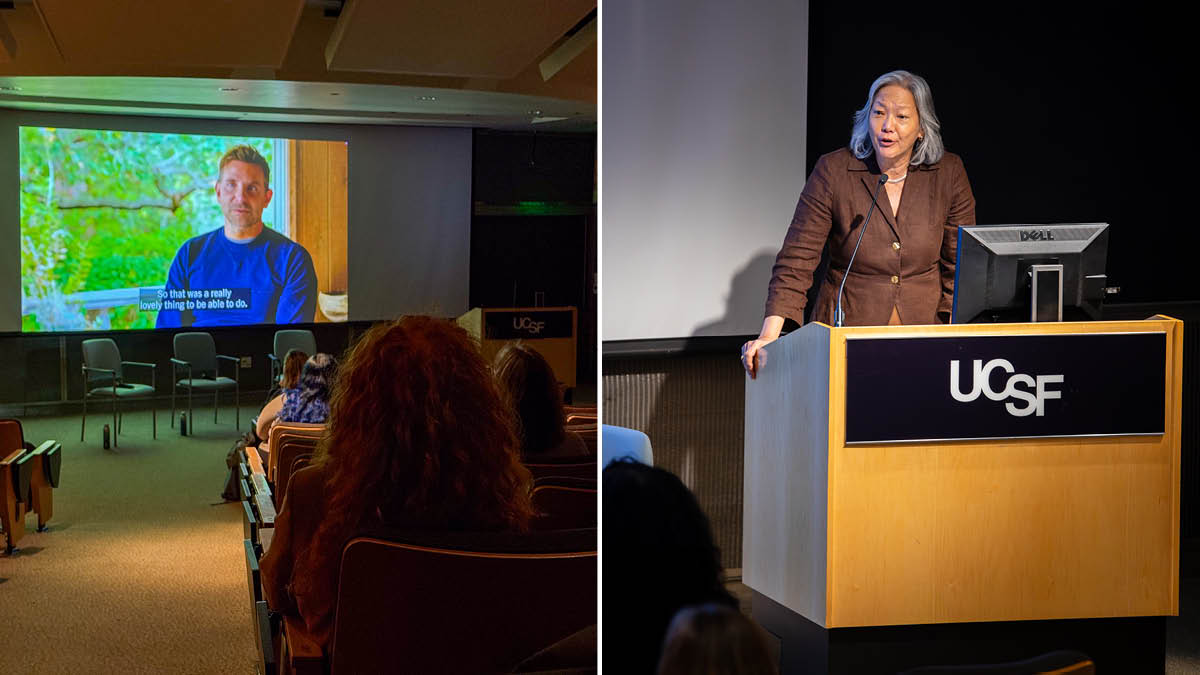
Last week, in honor of National Family Caregivers Month, UC San Francisco and By the Bay Health hosted a special community screening of the new PBS documentary Caregiving.
In the U.S., an estimated 63 million people and counting provide formal or informal care to someone who is ill, according to a 2025 report by the American Association of Retired Persons and the National Alliance for Caregiving.
“They not only hold families together through uncertainty but also serve as an essential part of the care team with the providers, optimizing patient outcomes,” said Susan Chang, MD, a UCSF neuro-oncologist and the co-director of the UCSF Neuro-Oncology Gordon Murray Caregiver Program. “Their work is deeply personal, often invisible, and profoundly impactful.”
Caregiving, produced by actor Bradley Cooper, depicts the challenges individuals face as they navigate illness while balancing other responsibilities at home, school, and work.
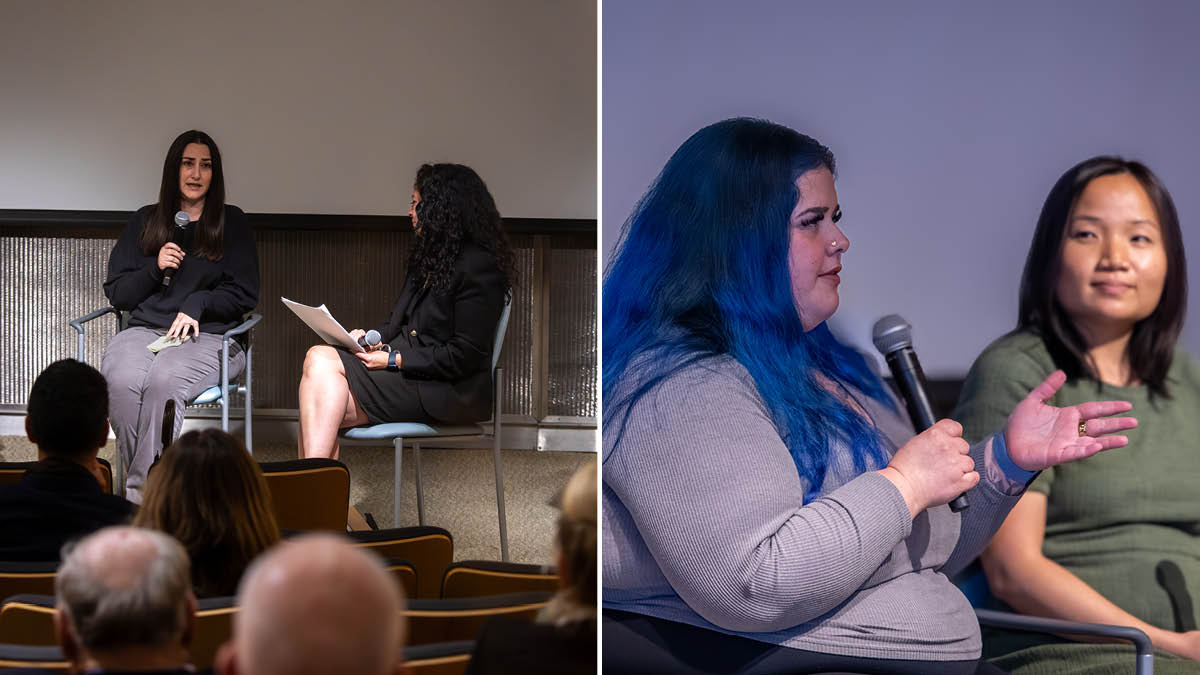
Liz Piña, a caregiver on the panel discussion following the screening, said that there were lots of difficult moments she and her husband, Julio, experienced after he was diagnosed with a brain tumor called an ependymoma in 2018. His tumor recurred in 2020, and they continued experiencing setbacks in his care journey. He passed away earlier this month.
“This is the life that we had, and so we lived it,” she said. “But I think that we really couldn’t have done it without other people in our corner.”
Through UCSF’s brain tumor caregiver support group, Piña found a community to guide her.
“I met people through the support group who were very honest and open about their experiences throughout,” she said, adding that she felt lucky to have access through the UCSF Brain Tumor Center’s unique caregiver program to resources specific to neuro-oncology patients and their families.
“Your brain controls everything: it’s your body, your voice, your emotions,” she said. “It’s like nothing else.”
Knowing more about what she could expect helped her navigate difficult conversations with her husband about his wishes early on. This helped her be confident in her ability to advocate on his behalf, especially once he started having difficulty speaking.
But asking for help is not necessarily something that comes naturally to many caregivers.
Karena Nguyen, MD, a UCSF patient advisor and family caregiver, said that growing up, she internalized the mentality that she had to be independent and self-reliant.
“My whole worldview really shifted when my mom was diagnosed with cancer,” she said. “Being comfortable asking for help isn’t a sign of weakness. It’s a sign that I care about my mom.”
Leaning on others helps caregivers fight feelings of isolation and avoid burnout.
“When caregiver mental health is good, it’s easy to pour into our loved one’s cup, and when we’re running on empty, it’s very hard,” said Celeste Chacon, who cares for her daughter with lissencephaly. “We do it anyway because we have to. But finding ways to pour into yourself — no matter how small — can make all the difference.”
What that looks like may be different for each caregiver. For Nguyen, it’s been meditation and attending church. For Chacon, nothing beats putting on her favorite TV show after her daughters have gone to sleep.
Claritza Rios, MD, the Chief Medical Officer for By the Bay Health and moderator for the panel discussion, advised looking into options for short breaks from caregiving duties through local respite care services.
The panel also offered plenty of advice for the people around caregivers. Nguyen, who is now also an internal medicine specialist, recommended that physicians seek input from hospital case managers and social workers about the informational, logistical, and financial resources that may be available to patients and their families. She also knows first-hand the value of clustering medical appointments for patients.
Nguyen’s biggest piece of advice to friends and other family: don’t wait to be assigned a task or ask what you can do to help.
“People mean well, but it’s a burden for us to figure out what they can do,” Piña added.
And through it all, the caregiver panelists agreed that they’ve grown from their experiences.
“There’s plenty of happiness to be found in the worst situations,” Piña said. “My perspective on life and what matters has drastically changed over the last few years.”
The UCSF Neuro-Oncology Gordon Murray Caregiver Program, the UCSF Helen Diller Family Comprehensive Cancer Center, the UCSF MERI Center for Palliative Care Education at Mt. Zion, and UCSF Benioff Children’s Hospitals partnered with By the Bay Health to organize this special event. Watch the panel discussion here.