

UCSF Neurosurgeon Delivers New Cancer Policy Recommendations to the President
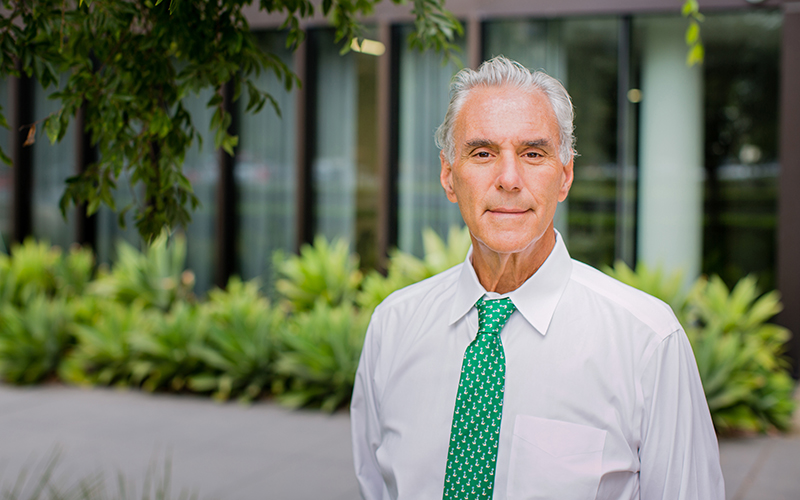
Mitchel S. Berger, MD, director of the UCSF Brain Tumor Center, recently co-authored a new report about the state of the cancer workforce in his capacity as a member of the President’s Cancer Panel.
He has extensive experience delivering advanced care for patients with brain cancer and has a deep understanding of how to translate the latest research discoveries into new treatments. He is the principal investigator of the Brain Tumor Specialized Program of Research Excellence (SPORE) grant at UCSF, which has been continuously funded by the National Cancer Institute since 2002. He also previously served on the Blue Ribbon Panel of scientific experts created to steer the Cancer Moonshot Initiative.
We spoke with him about his tenure on the President’s Cancer Panel, which began in January 2023, and the new policy recommendations.
What is the President’s Cancer Panel, and why does it publish reports like this one?
The President's Cancer Panel was established in 1971 through the National Cancer Act. This three-member panel reports directly to the President of the United States with recommendations to reduce the burden of cancer for the American people.
We monitor the progress being made by the National Cancer Program, which represents cancer survivors, people at risk for cancer, health care providers, family members, and caregivers. The Program connects local, state, and federal governments. It also brings together the pharmaceutical and biotech industries, both private and academic healthcare systems, academic institutions that train the next generation of clinicians and researchers, and nonprofit cancer advocacy organizations.
About three years ago, the National Cancer Institute established a plan with eight goals that could affect the delivery of care and hopefully alleviate the suffering associated with cancer. One of these goals had to do with how the workforce — both in research and in care — is dwindling.
How did the Panel gather information for this report?
In September 2024, we hosted a two-day public meeting, where we discussed approaches both on the research side and on the clinical side that would strengthen the workforce.
How do the Panel's recommendations aim to promote change?
One priority area is to promote partnerships across institutions to improve access to cancer care and clinical trials for patients. Our recommendation to the President was to get CMS [the Centers for Medicare & Medicaid Services] to increase the presence for telehealth and to promote interstate licensure. This is especially important in rural parts of the country and other areas with limited access to specialty care. In the COVID era, we were given the ability to practice across state lines with telehealth, but that’s been rolled back.
Another priority area had to do with expanding educational and training pathways. Our recommendation is that comprehensive cancer centers should train allied health care professionals.
Our final priority was to support the productivity of cancer care teams. For example, our electronic healthcare records (EHRs) should be designed to send frequent health reminders to patients. And EHRs should be better at notifying physicians when patients are having a problem — like when their numbers on routine lab tests are not right.
Another big suggestion, which I brought forward as someone taking care of patients, is reforming prior authorization. Prior authorization is a nightmare, and it’s burning physicians out. As an example, one of my patients was recently denied authorization to proceed with a tumor resection that required brain mapping, which is not available outside of specialized centers. They were able to get the procedure, but it took time to work through things with their insurance. Many insurance companies are also using AI to automatically deny people. We recommend a mandate, through CMS, that only experienced providers with expertise in the same specialty can deny authorization.
Why should patients and families care about a report that is written for the President?
We’ve done our due diligence over the past 14 months to make this report happen, and now we have these recommendations that we hope to get implemented. Now that this report is public, there’s a real opportunity for patient advocacy groups to engage with legislators so they can enact these changes. For example, CMS used our last report to develop reimbursement codes that support patient navigators.
What's next for the Panel?
We’re on to vetting our next set of topics. One is environmental causes of cancer, and another problem that’s on our radar is that cancer in young people is increasing.
Once we decide which subject to focus on, we’ll host public hearings in the summer and then a report that would go the President the following year.